
February 12, 2026 Allen Levin
Search has changed. You no longer compete only for blue links on Google. You also compete for space inside AI-generated answers from tools like ChatGPT and Google AI Overviews.
Future-proof brands optimize for both SEO and GEO because you need visibility in search results and inclusion in AI-generated answers to stay competitive. SEO helps your pages rank and drive traffic. GEO helps your brand get cited, summarized, and recommended when AI tools answer questions directly.
If you rely on only one approach, you miss part of the search landscape. A strong SEO vs GEO strategy combines clear, structured content with authority and trust so you show up wherever people look for answers.
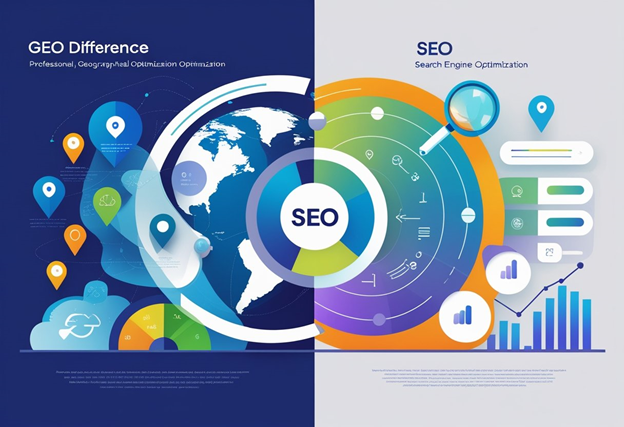
Search now runs on two systems: traditional search engines and AI-powered search engines. You need a strategy that earns rankings in Google and earns citations inside AI answers.
SEO (Search Engine Optimization) helps your pages rank in search engine results pages (SERPs). You optimize for keywords, backlinks, technical health, and search intent alignment.
Users type short queries like “best CRM software”. Google returns ranked links, featured snippets, and product lists. Your goal is higher placement and more clicks.
GEO (Generative Engine Optimization) focuses on AI-driven search tools such as ChatGPT, Perplexity, Gemini, and Google AI Overviews (formerly SGE). These systems generate direct answers instead of just links.
You optimize for:
The key difference between GEO and SEO is simple: SEO earns rankings; GEO earns recommendations and citations inside AI answers.
AI-powered search engines change how users see information. Instead of scanning ten blue links, users read one generated response.
This shift increases zero-click search. Many users get their answer without visiting a website. AI answers often replace featured snippets with longer summaries.
You now compete for inclusion inside an answer, not just a ranking. That changes your SEO strategy for AI search engines.
AI systems rely on:
AI search visibility depends on whether the model sees your brand as reliable. If your content lacks clarity or authority, AI may exclude it even if you rank well in Google.
Optimizing for AI search means writing complete answers to natural language prompts, not just targeting isolated keywords.
Traditional SEO tracks:
These metrics measure search engine visibility and on-site performance.
GEO uses different signals. You track:
AI citation frequency shows how often tools like ChatGPT reference your brand. Brand visibility in AI results reflects whether your company appears in summaries, comparisons, or tables.
Traffic may drop as AI-driven search trends grow. But qualified visitors may increase because AI filters out low-intent clicks.
You must measure both ranking performance and AI presence to understand real search impact.
You cannot treat SEO and Generative Engine Optimization as separate efforts. They overlap in content quality, authority, and structure.
A dual visibility strategy includes:
SEO secures placement in Google’s index. GEO increases your chance of appearing in AI-generated responses.
Google AI Overviews pull from indexed content, so poor SEO limits your AI exposure. At the same time, ranking #1 does not guarantee AI inclusion.
Future-proof brands align content with search intent, structure it for machine reading, and build authority beyond their own website. This combined approach protects your visibility as AI search continues to expand.
You need one system that supports both rankings and AI-generated answers. That means structuring content for search engines and language models at the same time, measuring visibility in both places, and building clear authority signals that machines can verify.
You future-proof your SEO strategy when you structure content for both crawlers and AI systems. Clear headings, short sections, and direct definitions help Google rank your pages and help tools like ChatGPT extract answers.
Focus on entity-based optimization, not just keywords. Define people, products, categories, and problems in plain language. Connect them with clear relationships. For example, state what your product does, who it serves, and how it differs from alternatives.
Use:
This approach supports AI content optimization and improves your chances of appearing in AI-generated summaries. When your content is structured and factual, AI systems can cite it with confidence.
Practical Steps: Auditing, Optimizing, and Measuring Dual Visibility
Start with an AI visibility audit. Search your key topics in Google AI Overviews and tools like ChatGPT. Track whether your brand appears in answers, summaries, or citations.
Then review your top pages:
Update pages to support AI citation optimization. Add short, quotable explanations. Include statistics when relevant. Keep language simple and factual.
Measure two sets of signals:
| SEO Metrics | AI Visibility Metrics |
| Rankings | Brand mentions in AI answers |
| Organic traffic | Citations or references |
| Click-through rate | Inclusion in AI summaries |
This dual tracking supports a strong Generative Engine Optimization strategy for businesses. You see where you rank and where AI systems rely on your content.
AI systems look for consistency. If your brand description changes across pages, profiles, and platforms, you weaken your digital authority.
Align your:
Use the same core definitions and positioning everywhere. This strengthens digital authority building and helps AI connect your brand to the right topics.
Support your content citation strategy with credible signals. Publish original insights, cite reliable sources, and maintain updated content. Strong backlinks still matter for SEO and AI integration because authority influences both rankings and AI trust.
When you combine structured content, clear entities, measurable AI visibility, and consistent authority, you improve how to rank in AI search results without losing traditional SEO performance.
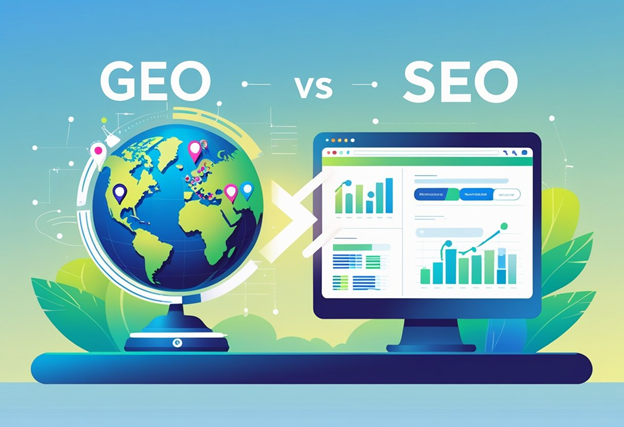
GEO and SEO serve different roles in modern search. You need both if you want traffic from search engines and citations from AI tools like ChatGPT, Gemini, and Perplexity.
What are the differences between GEO optimization and SEO?
SEO focuses on ranking your web pages in search engine results. You optimize for keywords, backlinks, site speed, and technical structure to earn clicks.
GEO focuses on getting your content cited or summarized in AI-generated answers. You optimize for clear statements, structured data, consistent facts, and strong authority signals.
SEO aims to drive users to your site. GEO aims to make your brand part of the answer, even if the user never clicks a link.
Success metrics differ. SEO tracks rankings, traffic, and conversions. GEO tracks citation frequency, brand mentions in AI responses, and inclusion in generated summaries.
How can integrating both GEO and SEO strategies benefit my brand?
When you combine both, you cover two discovery paths. You capture users who search on Google and users who rely on AI assistants.
SEO builds steady organic traffic over time. GEO increases the chances that AI tools recommend or quote your brand in direct answers.
Together, they reduce risk. If search behavior shifts further toward AI-generated results, your brand remains visible instead of losing reach.
What are the key elements to consider when optimizing for GEO?
You need structured content. Use clear headings, short answers, FAQ sections, tables, and schema markup so machines can extract your information.
Place the main answer near the top of the page. Write direct, factual sentences that an AI system can quote without rewriting.
Support claims with evidence. Add author credentials, cite sources, and show update dates.
Keep product names, pricing, and key facts consistent across your website and third-party platforms. AI systems compare sources and favor information that matches across the web.
In what ways does SEO contribute to a brand’s long-term online success?
SEO builds durable visibility in search engines. Strong technical structure, relevant content, and quality backlinks support steady rankings.
It drives qualified traffic from users with clear intent. Over time, that traffic can lower your cost per acquisition compared to paid channels.
SEO also strengthens domain authority. That authority can support new product pages, blog posts, and campaigns as your brand grows.
How has the evolution of search engine algorithms affected GEO and SEO priorities?
Search engines now show featured snippets, AI overviews, and zero-click results. This shift reduces the number of users who click through to websites.
As a result, SEO must account for on-page clarity and structured answers, not just keyword density. At the same time, GEO has gained importance because AI systems summarize content directly.
Both priorities now center on clarity, authority, and structured information. Algorithms reward content that is easy to interpret and verify.
Can GEO optimization tactics improve local search engine visibility and, if so, how?
Yes, if you apply GEO tactics to local content. Clear business details, structured local schema, and consistent name, address, and phone data help AI systems trust your listings.
Create location-specific FAQ pages that answer practical questions about services, hours, and coverage areas. AI assistants often pull from these when users ask local queries.
When your local information appears consistently across directories, review sites, and your website, AI tools are more likely to cite your business in local recommendations.