
AI Tools
AI Phone Systems Are Evolving — Here’s Why 2025 Is the Breakout Year for Smarter Business Communication
AI phone systems have been around for years, but 2025 marks the point where they move from useful to essential. Smarter chips, faster processors, and improved software now allow AI to operate directly on devices, not…
On this page
- Key Takeaways
- The Evolution Of AI Phone Systems
- Historical Progression of AI in Telephony
- Key Technological Milestones
- Notable Industry Innovators
- Why 2025 Marks The Breakout Year
- Market Dynamics and Adoption Rates
- Emerging AI Capabilities
- Regulatory and Compliance Shifts
- Major Advancements In AI Phone Technology
- Conversational AI Enhancements
- Personalization Through Machine Learning
- Integration With Cloud Communication Platforms
- Impact On Business Communication
- Customer Experience Transformation
- Productivity and Workflow Automation
- Security and Data Privacy Improvements
- Future Trends In AI Phone Systems Beyond 2025
- Predicted Innovations
- Shifts In Consumer Expectations
- Long-Term Implications for Global Communication
- Frequently Asked Questions
- Allen Levin
- AI-Powered Solutions to Revolutionize How Small Businesses Work
- Solutions
- About Us
- Contact
AI phone systems have been around for years, but 2025 marks the point where they move from useful to essential. Smarter chips, faster processors, and improved software now allow AI to operate directly on devices, not just in the cloud. AI phone systems in 2025 stand out because they handle complex communication tasks faster, more naturally, and with greater reliability than ever before.
Companies across industries are shifting to these systems to improve customer support, automate workflows, and provide real-time language translation. Users benefit from conversations that feel more human and context-aware, creating smoother interactions that save both time and cost. This evolution signals a bigger change in how AI integrates into daily communication tools.
By the end of 2025, nearly every major phone platform is expected to feature embedded AI that learns from its environment and adapts to user needs. The shift points to a future where AI does more than respond—it understands.
Key Takeaways
- AI phone systems now perform faster, smarter, and more accurately.
- 2025 represents the turning point in AI-driven communication technology.
- Future systems will become more adaptive and personalized in real time.
The Evolution Of AI Phone Systems
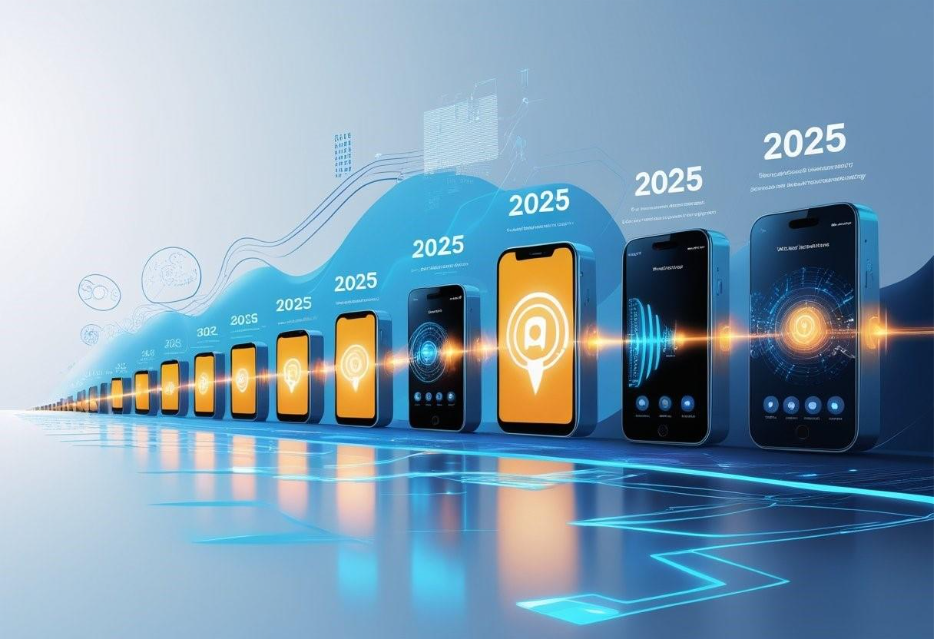
AI phone systems have grown from simple voice routing tools into intelligent assistants that understand context, intent, and emotion. Their evolution reflects advances in natural language processing, real-time data integration, and adaptive learning models that now make business communication faster and more accurate.
Historical Progression of AI in Telephony
AI in telephony began in the mid-20th century with basic voice recognition experiments. Early systems could identify a few words but lacked real understanding. By the 1990s, digital signal processing improved recognition accuracy, enabling more reliable automated call handling.
The 2000s brought interactive voice response (IVR) systems that guided callers through menus. Though efficient, these systems were often rigid and prone to frustration. When cloud computing became widespread in the 2010s, it allowed more flexible and scalable voice AI systems.
Recent years have seen a shift from static scripts to conversational AI, which can learn from user interactions and improve over time. These systems can now predict caller needs, manage queues, and provide detailed support with minimal human input.
Key Technological Milestones
Several major breakthroughs have shaped today’s AI phone systems:
Year Milestone Impact 1950s–1990s Early voice recognition Basic word detection, limited vocabulary 2000s Rule-based IVR systems Automated routing and menu navigation 2010s Cloud & machine learning integration Scalable, data-driven responses 2020s Multimodal communication & real-time analytics Context-aware, adaptive systems
Recent advances, such as sentiment analysis, let AI detect tone and mood to adjust responses in real time. Improvements in real-time transcription enable instant documentation and analysis of calls. AI now connects seamlessly with business platforms, giving agents context before they speak with customers.
Notable Industry Innovators
Several companies have led this transformation. Google, Microsoft, and Amazon developed natural language frameworks that power many enterprise solutions. Specialized firms like Five9, RingCentral, and Zoom have integrated AI to automate call routing, transcription, and analytics.
Emerging developers focus on multimodal AI, enabling systems to interpret both speech and visuals during video calls. This capability helps businesses identify customer reactions and guide them through processes more efficiently. These innovators continue refining systems that balance automation with personalized human interaction.
Why 2025 Marks The Breakout Year
Rapid advances in AI-driven communication, increased enterprise adoption, and new compliance frameworks are aligning to make 2025 a defining year for voice and phone automation technologies. Businesses are scaling these systems from pilot programs to full deployment as capabilities mature and regulations catch up with innovation.
Market Dynamics and Adoption Rates
In 2025, widespread enterprise integration of AI phone systems is accelerating due to measurable cost savings, improved customer response times, and higher service availability. Companies are replacing outdated call centers with AI-powered platforms that operate 24/7 and handle multilingual interactions.
Adoption rates have grown sharply as organizations shift from testing isolated voice bots to embedding them within broader customer experience strategies. A growing number of industries—banking, healthcare, retail, and logistics—now depend on these intelligent systems to manage routine customer communication.
Analysts note that AI-enabled phone support reduces average handling times by up to 40% while maintaining consistent quality. Combined with declining cloud infrastructure costs, this creates strong financial incentive for mid-size and large enterprises to move quickly. 2025 marks the first year that scalability, reliability, and affordability intersect at a usable level for most businesses.
Emerging AI Capabilities
The new generation of AI phone systems leverages generative AI, real-time language translation, sentiment analysis, and contextual understanding. These upgrades replace scripted responses with dynamic conversations that adjust in tone and depth based on user input.
Modern systems can now interpret intent more precisely, resolve issues autonomously, and even maintain continuity between voice and text channels. The ability to integrate with CRM and workflow software helps agents focus on complex inquiries while the AI manages repetitive calls.
Some leading solutions also support natural speech synthesis that sounds less robotic and more human, improving trust and satisfaction. With these tools, companies gain an almost immediate return on investment because training new models and deploying updates happens faster and at lower cost.
Regulatory and Compliance Shifts
Governments and industry bodies are issuing new AI governance and data privacy guidelines that clarify acceptable use for voice interactions. In 2025, stricter policies on data storage, voice recording, and consumer consent aim to build public trust without stifling innovation.
Compliance automation now helps organizations verify that every conversation meets these standards. For example, detailed audit logs and real-time monitoring allow companies to track how AI decisions are made and adjust when necessary.
In regions such as the EU and North America, regulatory frameworks have matured enough to give enterprises confidence to deploy large-scale voice AI systems. The clearer rules remove much of the previous hesitation seen among regulated sectors like healthcare and finance. These policy updates serve as a catalyst, not a barrier, for responsible expansion.
Major Advancements In AI Phone Technology
AI-powered smartphones now perform complex tasks directly on the device, reducing reliance on external servers and improving speed, privacy, and battery efficiency. These advancements make communication more natural, personalized, and secure by using new AI chips and advanced software models.
Conversational AI Enhancements
AI assistants in 2025 show major leaps in contextual understanding and speech generation. They process language locally on new neural chips, allowing near-instant responses without sending data to the cloud. This improvement boosts privacy and reduces lag during voice interactions.
Developers train on-device language models with billions of parameters, enabling the phone to handle more open-ended and multi-turn conversations. The result is an assistant that remembers user preferences, interprets tone, and responds naturally.
Examples of current upgrades include:
- Smarter call screening that detects spam and explains caller intent.
- Voice commands that control apps without network access.
- Adaptive assistants that understand conversational shortcuts.
These improvements make phones act less like tools and more like intelligent partners that can complete tasks through brief contextual cues.
Real-Time Language Translation
AI translation on smartphones now operates fully on-device, cutting out the delays of internet-based tools. Modern processors achieve over 40 to 100 trillion operations per second (TOPS), giving phones enough computation to translate speech, text, and even camera visuals instantly.
This lets travelers or business users communicate across languages with live captions during calls or video chats. Key updates in 2025:
Feature Description Offline Translation Supports 40+ languages without connectivity Camera-Based Translation Overlays translated text in augmented reality view Multilingual Call Support Translates ongoing calls in real time
These abilities improve accessibility and inclusion by letting users interact freely without depending on external translation services.
Personalization Through Machine Learning
Smartphones now adapt to individual habits more precisely. Machine learning models track patterns such as app preferences, writing tone, and screen use to predict what the user needs next.
A phone may automatically adjust settings based on context — for example, dimming brightness at night or muting notifications during meetings. Personalization now focuses on:
- Context-aware suggestions for replies, navigation, or task scheduling.
- AI-based image tuning that recognizes user photography styles.
- Privacy-focused learning, where data stays encrypted or processed locally.
These features let users maintain control while benefiting from a tailored experience, making technology feel supportive rather than intrusive.
Integration With Cloud Communication Platforms
AI phones increasingly connect with cloud-based systems used for work calls, messaging, and collaboration. Integration allows seamless transitions between mobile and desktop devices without losing context or call quality.
Cloud-linked AI automates note-taking, meeting transcription, and real-time summaries. Many devices now support enterprise-grade communication apps such as Microsoft Teams or Google Meet through built-in APIs, reducing the need for third-party add-ons.
In hybrid workplaces, this approach provides consistent experiences whether users communicate from a desk, phone, or remote location. It also strengthens data continuity by syncing updates securely in real time across all connected platforms.
Impact On Business Communication

AI-driven phone systems in 2025 are changing how businesses connect with customers, manage daily operations, and protect sensitive data. Advanced automation, real-time analytics, and smarter security features now make communication faster, more efficient, and more reliable for organizations of all sizes.
Customer Experience Transformation
AI phone systems now manage large volumes of calls with minimal wait times. Intelligent call routing sends customers to the right agent or automated assistant based on their needs, reducing frustration and improving satisfaction.
Many companies use AI-powered virtual agents that handle routine questions, book appointments, and provide personalized responses. These tools rely on natural language processing (NLP) to understand requests and respond conversationally.
A key benefit includes better insight into customer sentiment. Voice analytics track tone and keywords during calls, helping businesses identify issues before they escalate. When combined with CRM data, AI systems can predict preferences and tailor support to specific customers.
This consistent, data-backed communication helps brands deliver faster, more accurate, and more human-like interactions.
Productivity and Workflow Automation
AI phone systems now automate many repetitive communication tasks. They can transcribe calls in real time, summarize discussions, and send structured notes directly to internal systems. This reduces manual follow-up work for employees and keeps records accurate.
Automatic call classification helps teams sort inquiries by topic or urgency, improving workflow organization. Integration with tools like calendars, email, and ticketing platforms ensures smoother handoffs between staff members.
Machine learning also improves over time. As AI observes call patterns, it adjusts routing processes to match typical traffic and agent availability. This optimization increases response speed and reduces downtime.
By removing routine tasks, employees can spend more time on problem-solving and relationship-building. The result is a more efficient and focused communication environment.
Security and Data Privacy Improvements
As AI handles more call data, privacy and security standards have become stricter. Modern phone systems use end-to-end encryption and multi-level authentication to protect voice and text interactions.
AI strengthens fraud detection by recognizing unusual speech patterns or call behavior linked to phishing attempts. It can automatically flag or block suspicious interactions before damage occurs.
Compliance tools are another improvement. AI systems can log and store call data according to regional data protection laws, reducing regulatory risk.
Companies that invest in these secure AI platforms gain stronger data control, faster threat identification, and a more trustworthy communication network.
Future Trends In AI Phone Systems Beyond 2025
AI in mobile technology will continue advancing through smarter on-device intelligence, adaptive features, and the global adoption of connected ecosystems. These developments will influence how users interact with technology, how companies design communication tools, and how society manages data-driven interactions.
Predicted Innovations
By the late 2020s, AI phones will rely less on cloud processing and more on on-device learning. This shift will make devices faster, more private, and better at personalized tasks. Phones will adapt to users through context-aware behavior, predicting needs like adjusting settings based on location or mood.
Manufacturers will embed agentic AI systems, allowing phones to make small decisions independently, such as scheduling or routine replies. The rise of generative AI cameras and real-time translation will remain central, turning smartphones into tools for instant content creation and global communication.
Innovation Area Expected Development On-device AI Faster processing, privacy control Communication Live translation, voice synthesis Imaging Generative photo and video tools
New interfaces, such as voice-first control and gesture recognition, will make interactions smoother and reduce reliance on screens.
Shifts In Consumer Expectations
People will expect their devices to understand, not just respond. Phones will need to recognize user intent and emotion to deliver more intuitive assistance. Personal privacy will become a stronger priority, pushing manufacturers to design systems that store and learn from data locally.
Users will look for transparent AI features, where actions are easy to track and modify. Subscription-based AI features may grow, letting users choose specialized tools for creativity, productivity, or accessibility.
Younger consumers will value sustainability and ethical AI, expecting devices that use renewable materials and responsible data practices. Companies that ignore these expectations risk losing trust. As AI features become standard, performance will matter less than how well a device aligns with a person’s daily routines and values.
Long-Term Implications for Global Communication
AI-driven language technology will lessen barriers between regions. Real-time speech and text translation will make cross-border communication seamless, enabling smoother collaboration in business, education, and healthcare.
Networks using edge computing will process communication data locally, improving speed and reliability in areas with poor connectivity. This will help close digital access gaps and make information exchange more inclusive.
Governments and industry groups will likely need new AI communication standards to manage privacy, data ethics, and misinformation. As phones evolve into semi-autonomous digital assistants, managing identity, consent, and authenticity in communication will become an essential part of the design process.
Frequently Asked Questions
AI phone systems in 2025 are advancing through improved natural language models, faster cloud processing, and stronger data protection. Companies are adopting these systems to enhance communication, reduce costs, and meet customer expectations for quicker, more accurate responses.
What technological advancements have propelled AI phone systems to prominence in 2025?
Several innovations have driven AI phone systems forward this year. Advanced voice recognition now allows more natural interactions with virtual agents. Cloud-based AI platforms enable real-time call analysis and routing. Businesses also benefit from machine learning that personalizes responses based on caller history and intent.
How is the 30% rule shaping the development and adoption of AI in phone systems?
The “30% rule” refers to a common industry benchmark where businesses aim to automate roughly 30% of routine call handling. This balance keeps customer satisfaction high while improving efficiency. It helps companies adopt AI responsibly, avoiding full automation that might frustrate callers who prefer speaking to humans.
What are the most significant AI trends impacting telecommunications this year?
AI-driven voice bots and intelligent IVR systems are leading trends. Real-time analytics now help track call performance and detect patterns in customer behavior. Integration with customer relationship management (CRM) tools allows for smoother handoffs between virtual and human agents.
In what ways are AI phone systems enhancing customer service and user experience?
AI systems provide faster responses and resolve basic questions without wait times. They can transfer complex issues to human agents with full context, reducing repetition. Personalized interactions based on caller data help create a more seamless and efficient service experience.
What are the privacy and security implications of widely adopted AI phone systems?
Widespread use of voice data raises new privacy concerns. Companies must comply with stricter data protection laws and ensure encrypted storage of call recordings. Improved authentication methods, such as voice biometrics, add security but also require careful regulation and user consent.
How are businesses adapting to the integration of AI in their communication infrastructure?
Organizations are investing in staff training to manage AI tools and analyze system insights. Many are upgrading their phone networks to cloud-based platforms to support AI capabilities. Small and medium businesses are also deploying scalable AI phone solutions that reduce overhead costs while boosting customer engagement.

Allen Levin
Meet Allen Levin, a seasoned Digital Marketing Maestro and Entrepreneur boasting a decade of prowess in lead generation, SEO mastery, Facebook Advertising, Google Advertising, and Social Media. With a proven track record of crafting triumphant campaigns, Allen has been the architect behind the success stories of numerous small business owners, empowering them to flourish, expand their clientele, and imprint their brand in their target market.
Having honed his skills in the trenches of major brands like the Miami Dolphins and Breakthru Beverage, Allen ventured into the entrepreneurial realm to establish Smarty Pantz Marketing. Here, his mission is clear: to propel businesses to unprecedented heights through SMART marketing strategies that not only resonate profoundly but also innovate, deliver tangible results, encompass holistic approaches, and meticulously track progress.
Recent Posts
** January 23 2026
How Generative Engines Decide Which Brands to Cite (And Which to Ignore): Ranking Signals and Visibility Factors
** January 21 2026
Unlocking Potential: The Transformative Power of Customized AI Solutions for Enterprises
** January 19 2026
The Power of Local Expertise in AI Consultancy: Why It Matters for Your Business
AI-Powered Solutions to Revolutionize How Small Businesses Work
From lead generation to employee management, we help you save time, reduce expenses, and focus on growth with AI-driven tools tailored for small businesses.
Book Your Free Demo
Share Now In: !Follow by Email !Facebook !fb-share-icon !X (Twitter)
!LinkedIn !Share


At Authority AI, we’re revolutionizing small businesses with cutting-edge AI solutions that Revolutionize Processes, Boost Efficiency, and Drive Growth.
Schedule a Discovery Call
Youtube
X-twitter
Solutions
- Sales
- Marketing
- HR
- Operations
About Us
- About Us
- Contact Us
- Blog
Contact
Phone:
954-716-8740
Address:
300 SE 2nd St Suite 600, Fort Lauderdale, FL 33301
Email:
info@authorityai.ai

Next Step
AI Training
Hands-on AI training that leaves your team able to use it Monday morning.
Author
Authority AI
Authority AI is an AI transformation consultancy in Fort Lauderdale, Florida, helping service-based businesses turn AI into working business performance.